El Cielo snorkeling is the easiest reef-and-sandbar day in Cozumel for beginners, and this guide covers gear, technique, park rules, and what you will see.
Plenty of people book El Cielo snorkeling having never worn a mask in their life. They step off a cruise ship, climb onto a boat, and four hours later they are floating over a reef, waving at a sea turtle, and standing waist-deep on a white sandbar with a cold drink in hand. It works because El Cielo is about as forgiving as snorkeling gets: shallow, sheltered, and run by guides who coach beginners every single day.
This guide is for that first-timer. It skips the "definitive history of the sandbar" material and answers the questions people actually ask before their first trip: what gear you need, how to breathe through a tube without panicking, what the marine park rules are, what you will see, and how the day unfolds on our El Cielo snorkeling tour from the cruise pier.
Is El Cielo Snorkeling Good for Beginners?
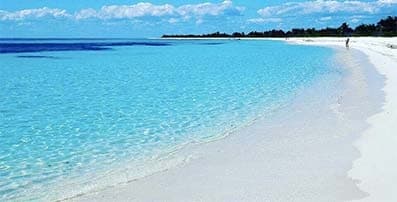
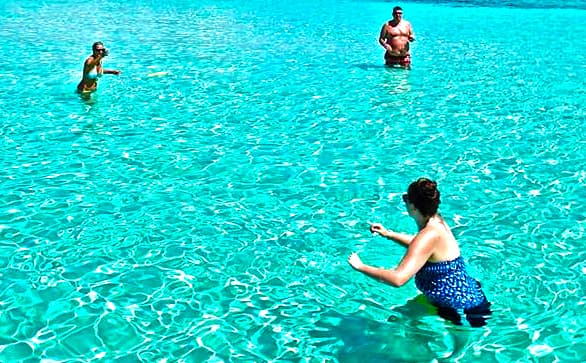
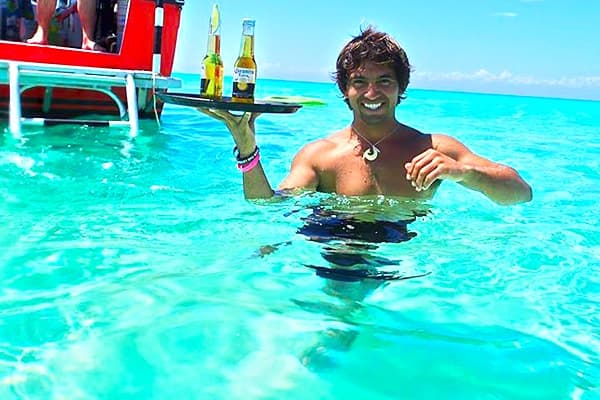
Yes, and for a reason that comes down to geography. El Cielo sits inside Cozumel's national marine park on the sheltered southwest side of the island, where the lee of the land blocks the open-ocean swell. The sandbar itself is roughly waist-deep over powder-white sand, so the "snorkeling" there is closer to wading with a mask on than to swimming. If you get tired, you stand up.
The reef stops that come before the sandbar are deeper, but still shallow by Caribbean standards, and you are never far from the boat. On our tour every guest wears a life vest, every group is capped at twelve people, and the guide gets in the water with you. Non-swimmers have done this tour and loved it, because the vest keeps you floating without effort and the guide stays close.
The one thing beginners should not do is book a large, crowded boat. Thirty people jumping off one platform at once is stressful for a first-timer, and nobody has time to coach you. Small groups are not a luxury on a first snorkel; they are the difference between a great day and a frightening one.
If your group would rather spend the whole outing on the reefs and skip the sandbar, our classic snorkeling tour Cozumel is the alternative. For a true first-timer, though, the sandbar's waist-deep water is the safety net that makes the day relaxing instead of nerve-wracking, and it is the reason we steer beginners toward El Cielo.
What Gear Do You Need for El Cielo Snorkeling?
Less than you think. The tour provides the mask, snorkel, fins, and life vest, and marine park and docking fees are included. What you bring from the ship fits in a small bag:
- Swimsuit worn under your clothes. There is no changing room on a boat.
- Towel. Ships will lend you a pool towel; just sign it out.
- Biodegradable sunscreen. The marine park requires reef-safe, biodegradable formulas, and regular sunscreen is not allowed in the water. Apply it on the pier, at least twenty minutes before you get wet, and reapply after the reef stop.
- A rash guard or light long-sleeve shirt. The single best sun protection for a fair-skinned first-timer floating face-down for half an hour.
- Sunglasses and a hat for the boat ride.
- A waterproof phone pouch or small action camera, optional but worth it at the sandbar.
Leave the jewelry on the ship. Rings slip off in the water, and shiny objects attract curious barracuda, which are harmless but unnerving up close.
If you have your own mask and it fits well, bring it. A mask that seals to your face is the single biggest factor in whether you enjoy snorkeling, and a familiar one removes a variable.
How Do You Actually Snorkel? A Five-Minute Skills Primer
Snorkeling is not swimming. You float, you breathe, and you look. Here is what the guide will show you, in the order that matters.
Fit the mask before you get in. Hold it to your face without the strap, breathe in gently through your nose, and let go. A good mask stays stuck to your face for a second or two. If it drops, adjust the position or ask for a different size. Keep hair out from under the silicone skirt, and if you have a mustache, a little petroleum jelly on it helps the seal.
Defog it. Spit in the mask, rub it around the inside of the lens, and rinse once in seawater. It looks ridiculous and works better than most commercial sprays. Do not rinse the mask again afterward or you wash the film off.
Breathe slowly through your mouth. The snorkel sits at the corner of your mouth with the mouthpiece behind your teeth. The first breaths sound loud inside your own head, which makes people think something is wrong. Nothing is wrong. Slow down, breathe from your belly, and the noise stops registering within a minute.
Clear water from the tube. Sooner or later a small wave will send water down the snorkel. The fix is one sharp exhale, like blowing out a candle, which pushes the water out the top. Practice it once at the boat ladder so the first real one does not surprise you.
Let the vest do the work. With a life vest on, you do not need to kick to stay up. Float face-down with your arms relaxed, and use a slow, gentle kick from the hip to move. Big splashy kicks stir up sand, scare the fish, and tire you out.
Never stand on coral. If you need a break at the reef, roll onto your back, or swim to the boat. At the sandbar, standing is fine because it is sand. Coral is a living animal, and stepping on it kills it.
What Will You See at the Reef and the Sandbar?
The day has two very different underwater scenes, and first-timers should know that going in.
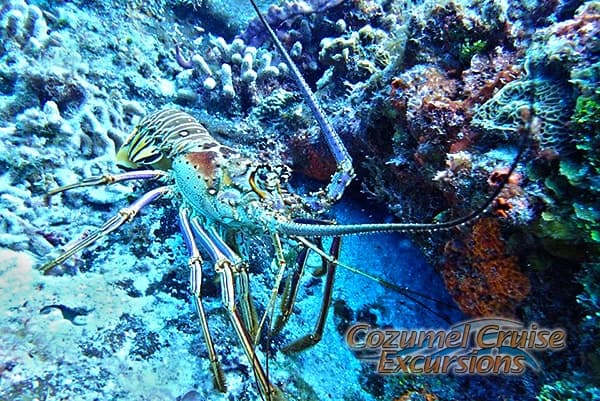
At the reef stops, which come first, you float over coral gardens where visibility on a good day stretches beyond what feels possible. Expect parrotfish crunching on coral, sergeant majors in striped clouds, angelfish, and, if the guide's usual spots deliver, a green or hawksbill sea turtle cruising beneath you. Spotted eagle rays glide along the sand edges. The guide will point and name things in real time; that is what they are there for.
Then the boat moves to El Cielo. The water turns a shade of turquoise that photographs never quite capture, the bottom becomes flat white sand, and the depth drops to your waist.
The residents here are cushion sea stars, orange and cream, dotted across the sand like someone scattered them. Southern stingrays pass through, and small fish shelter around the boat's shadow. This is the part of the day where nobody is in a hurry.
Between the two stops, the crew makes fresh guacamole on the boat, and the open bar opens. You do not need to bring cash for drinks.
What Are the Rules at El Cielo?
El Cielo is part of a protected national marine park, and the rules are enforced by park rangers who patrol the sandbar. The big ones:
- Do not touch, lift, or pose with the sea stars. Lifting one out of the water, even for a few seconds, can harm it. Look, float, photograph; do not handle.
- Do not stand on or touch coral at the reef stops.
- Biodegradable sunscreen only, as noted above.
- Life vests stay on while snorkeling in the park.
- No fishing, no collecting shells, no feeding fish.
Licensed operators carry marine park permits that grant access to the sandbar and the reefs; unlicensed boats can be turned away, which is why it pays to book with an operator who holds them. Our family has run the original El Cielo tour for more than twenty-five years, and the permits and park fees are part of the price.
One weather note: in winter, cold fronts known locally as nortes occasionally lead the port captain to close the harbor to small boats. When that happens, no tour operator in Cozumel goes out. A good operator will tell you the night before or first thing in the morning and refund or rebook you.
How Does a First-Timer's El Cielo Day Unfold?
From the pier, the day runs about four to four and a half hours, which fits comfortably inside a standard cruise stop. Here is the sequence so nothing surprises you.
Pickup. We meet you at your cruise pier, resort, or the ferry terminal; there is no taxi to arrange. Bring your ship's all-aboard time; our captains plan the return around it, and cruise passengers are covered by a back-to-ship guarantee.
Gear and briefing. On the boat, the guide fits masks and vests and runs through the skills above. Ask every question you have. First-timers who admit they are nervous get more attention, not less.
Reef stops. The boat anchors at one or two reef sites. You enter from a platform, float with the guide, and climb back aboard whenever you like. Many first-timers spend fifteen minutes at the first stop and thirty at the second, once the nerves settle.
The sandbar. The boat moves to the El Cielo sandbar, everyone wades in, and the guacamole comes out. This is where the photos happen.
Return. A relaxed ride back with time to spare before all-aboard.
If you finish the day hooked, which is common, Cozumel has a lot more reef to show you, and our snorkeling tours Cozumel lineup covers everything from private boats to sunset trips.
El Cielo snorkeling is the trip we recommend to anyone who has never snorkeled and wants to start somewhere calm, shallow, and beautiful. Bring a swimsuit and biodegradable sunscreen, let the guide handle the rest, and book with a family-run operator through Cozumel cruise excursions that has been taking first-timers to the sandbar since 1996. The starfish will still be there; the question is whether you will be.