A snorkeling tour in Cozumel works fine with glasses or contacts once you know what fits under a mask, what to bring and how much you will see.
Every week someone emails us the same worried question before a snorkeling tour: "I can't see a thing without my glasses. Is there any point?" There is, and the fix is usually simpler than people expect. Cozumel's reefs are big, bright and close to the surface, which is forgiving for imperfect eyes, and a few choices made before you leave the ship turn a blurry worry into one of the best days of the cruise. This guide covers contacts, glasses, prescription masks, and the realistic question of how much you will actually see.
Guides on the snorkeling tour Cozumel cruise guests book with us fit masks for a living, on faces with glasses marks and without. What follows is what they tell people on the boat.
Can you wear contact lenses on a snorkeling tour?
Yes, and for most people this is the best answer. Soft contact lenses sit happily under a well-sealed mask, and the water never touches them if the mask does its job. Two habits make it reliable.
First, if your mask floods or you need to clear it, close your eyes while you tip the water out, then open them. That keeps a wave from lifting a lens off the eye. Second, bring a spare pair in a case in your dry bag, plus a travel bottle of solution. Daily disposables are ideal for a cruise: wear a fresh pair in the morning, throw them away at the end of the day, and never worry about salt or sunscreen on a lens you need tomorrow.
Put your lenses in before you leave the cabin, with clean hands, and apply sunscreen afterward rather than before. Sunscreen on a fingertip that then touches a lens is the most common cause of a stinging, watery morning, and it has nothing to do with the sea.
Rigid gas-permeable lenses are more likely to dislodge in moving water, so if you wear them, keep your eyes shut during any mask clearing and consider a prescription mask instead. Whatever you wear, rinse your face with fresh water once you are back on deck and give your eyes a few minutes before you put sunglasses on.
One honest note. Eye doctors generally advise against swimming in contacts because water can carry microbes, so the goal is a mask that keeps water out entirely, and a plan to remove and discard or disinfect the lenses as soon as you are back aboard. If an eye is red or painful the next day, see a doctor rather than waiting it out. If you have had recent eye surgery of any kind, ask your surgeon before you book, not us.
Can you wear glasses under a snorkel mask?
No, and this is the question behind most of the worried emails. A mask seals against the skin around your eyes and cheeks, and glasses arms run straight through that seal line. Water pours in, the mask fogs on the lenses, and you spend the morning fighting two pieces of equipment instead of watching a turtle.
There are three real options. Switch to contacts for the day, if your eye doctor agrees. Use a prescription mask, which puts the correction into the mask glass itself. Or go without correction and let the reef's scale do the work, which sounds like a compromise and often is not.
If you only need glasses for reading, you can stop worrying now. Snorkeling is a distance activity, and presbyopia barely matters underwater. The one thing you will struggle with is the small screen on a waterproof camera, so set it up on the boat and leave it on a wide setting.
Please do not try to tape, wedge or trim your glasses into a mask. People do. It never ends well, and sunglasses on a lanyard will not survive the first wave over a shallow reef.
What is a prescription snorkel mask and should you buy one?
A prescription mask replaces the standard glass with corrective lenses. The simplest kind uses stock drop-in lenses in common strengths, matched to each eye separately, and costs far less than custom work. Dive shops and online retailers sell them. Custom-ground lenses, including bifocal panels for readers, are also made, but they take time to order and are harder to replace if lost.
Should you buy one? If you are strongly short-sighted, snorkel more than once a year, or cannot tolerate contacts, yes. A mask with your own correction turns the reef from an impression into a scene, and it is also the mask that fits your face, which matters more than most people realise.
If you are mildly short-sighted, or you want to try snorkeling once before investing, you may not need one. Read the next section first, and if you do buy, test the fit in a pool or a bathtub at home before it meets the Caribbean.
Standard masks and snorkels are provided on our tours, but corrective lenses are not something any operator can stock in every strength, so if you need one, bring your own and tell the guide. Pack it in your hand luggage, label the case, and keep it with you on the boat rather than in a shared bin.
How much will you actually see on a snorkeling tour without correction?
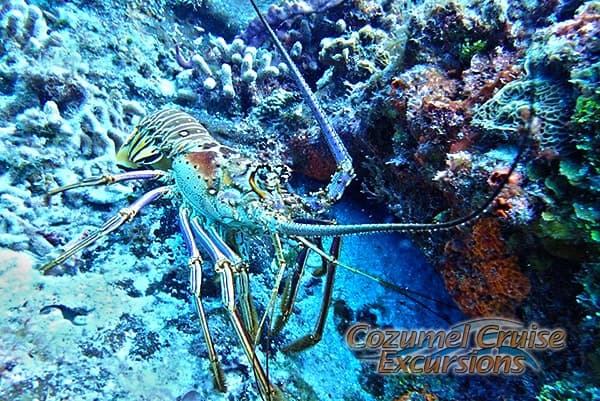
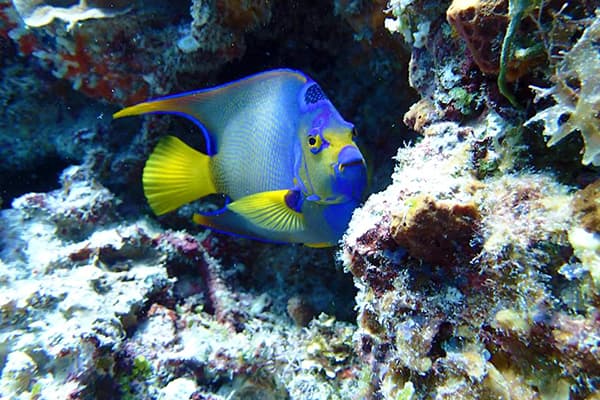
More than you fear. Underwater, objects look larger and closer than they are because of the way light bends between water and the glass of your mask, so everything is already slightly magnified. The subjects at Cozumel's reefs are not small either. Eagle rays, sea turtles, schools of blue tang and a coral wall dropping into deep blue are visible to eyes that struggle with a menu.
Visibility helps too. Cozumel's west coast is sheltered and the water is famously clear, so the limit on what you see is usually your own eyesight rather than the sea. Colour survives even when edges do not; a parrotfish is still a flash of turquoise and pink at arm's length.
Drift snorkeling, the style used on most Cozumel reef tours, also favours weak eyes. You float with the current, the boat follows, and the guide leads, so you are not navigating by sight. Your job is to look down and stay with the group, and the guide's job is to make that easy.
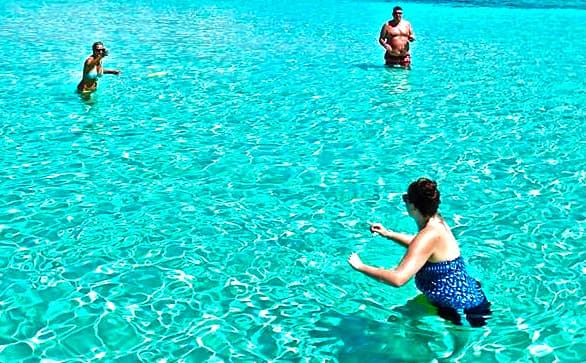
The sandbar at El Cielo is the most forgiving stop of all. You stand in waist-deep water over white sand and look down at cushion starfish the size of a dinner plate, which you look at and never lift. The spot everyone shortens to cielo is as much about floating in the colour as about spotting detail.
Where poor vision costs you is the small stuff: a juvenile drum hiding under a ledge, a splendid toadfish peering from its hole, a flamingo tongue snail on a purple sea fan. Those are guide-pointing moments for everyone anyway. Stay close to your guide, follow the pointing finger, and you will see most of what the sharp-eyed see.
What should glasses wearers pack and plan for a snorkeling tour?
A short list makes the morning easier:
- Your glasses in a hard case, and a lanyard for them on the boat. Deck time between reefs is when you want them most.
- A spare pair of contacts and travel-size solution, if you are going that route.
- Prescription sunglasses, or inexpensive clip-ons, for the ride back. Glare off the water is intense.
- A small towel and a bottle of fresh water for rinsing faces and lenses, which most boats carry but you may want in hand.
- A waterproof phone pouch, since you will not have your glasses on when the eagle ray appears.
- Anti-fog: a drop of baby shampoo or a rinse of the inside of the mask before each swim. Fogging blurs more than mild short-sightedness does.
Plan the walk too. Which pier your ship uses changes how far you walk to a meeting point and how much time you have, and the cozumel cruise port guide walks through all three piers so you can picture the morning before it starts.
Finally, tell your guide. Say "I can't see much without my glasses" at the mask fitting, and a good guide will fit your mask with extra care, keep you near the front of the group, and point things out at closer range. That is not special treatment. It is what the briefing is for.
Should kids with glasses join a snorkeling tour?
Yes, with the same three choices: contacts if their eye doctor allows, a youth-size prescription mask, or a well-fitted standard mask and a parent within arm's reach. Children often adapt faster than adults because they are less bothered by blur and more interested in the fish. Fit matters most for small faces, so ask the guide to check the seal, and give kids a few minutes at the surface near the boat before the group moves off.
A snorkeling tour is one of the few activities where weak eyes matter less than you expect, because the sea does half the focusing for you. Sort out contacts or a prescription mask before you sail, pack a spare of whatever you choose, and tell your guide. Then come find us. Cozumel cruise excursions runs reef and El Cielo trips timed to your ship, with guides who have answered the glasses question more times than they can count.