A cenote swim is not a pool and not the ocean — it is freshwater held inside limestone. You float less than you do in saltwater, the rock above you took hundreds of thousands of years to form, and the gear rules are different. Here is what your body actually experiences in a cenote.
What a Cenote Swim Actually Feels Like: Buoyancy, Rock, and Why It Isn't Like the Sea
People book a cenote swim expecting a prettier version of a swim they have already had. Then they get in, and something is subtly off. They sit a little lower in the water than they expect. The temperature is not what the Caribbean trained them for. The acoustics are wrong. And they are looking up at rock that is unmistakably old.
None of this is a problem. But it is genuinely different, and almost nothing written about cenotes explains the physical experience of being in one — as opposed to where they are, what they cost, or whether you should be nervous.
This article is about the water and the rock themselves. If you are wondering where Cozumel's cenotes are and how the excursions are structured, our complete guide to Cozumel's cenotes is the place to start — it covers the island's geology, the Jade Cavern, and how a cenote trip compares to the mainland Yucatán versions. And if your actual question is whether you are a strong enough swimmer, we answered that separately in are cenotes hard to swim in.
What follows is the layer in between: what your body does in cenote water.
You Float Less. This Is Real, Not Imagination.
Here is the single most noticeable difference, and the one nobody warns you about.
Seawater is denser than freshwater. Dissolved salt adds mass without adding much volume, so a litre of Caribbean seawater weighs meaningfully more than a litre of cenote freshwater — roughly two to three percent more. Buoyancy works by displacement: you float because the water you push aside weighs more than you do. Push aside lighter water and you get less lift.
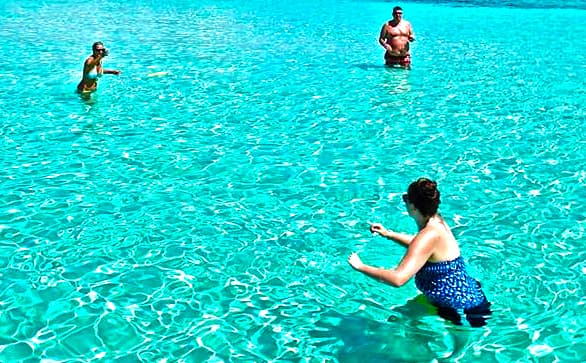
The practical effect is small in absolute terms and surprisingly large in felt terms. In the sea, most people float at rest with very little effort — the water does the work. In freshwater, the margin narrows. Swimmers who float easily in the ocean often find they have to tread slightly, or sit lower with the waterline higher on the face.
This catches out exactly the people you would not expect: confident ocean swimmers. They have calibrated to saltwater without knowing it, and the recalibration takes about two minutes.
Two things make it a non-issue. First, knowing it is coming. Second, a life jacket — which is standard on guided cenote excursions and which restores far more lift than the density difference takes away. There is no bravery hierarchy here; experienced swimmers wear them too, and in a cenote the sensible move is to let the vest do the floating so you can spend your attention on looking around.
The Water Is Cool, and It Is Cool All Year
The Caribbean around Cozumel is bathwater — warm enough that most people never think about temperature at all. Cenote water is not.
Cenotes are groundwater. The water in them has filtered down through limestone rather than sat in the sun, so it arrives at a temperature closer to the island's average ground temperature and stays remarkably stable year-round. Where the sea swings noticeably between seasons, a cenote in August and a cenote in January feel much the same.
That means the first thirty seconds involve a genuine intake of breath, especially if you have come straight from a warm boat or a hot van. It also means the cool is stable — there are no thermal layers to swim through and no warm shallow shelf to retreat to. You acclimatise quickly, and most people find it refreshing within a couple of minutes, particularly on a hot day.
It is also why cenote swims tend to be shorter than beach swims. You are not usually in for an hour.
The Water Is Extraordinarily Clear — Which Confuses Depth Perception
Reef water is clear. Cenote water is clear in a different way.
There is no plankton, no suspended sediment stirred up by surf, no algae bloom, and no wave action mixing anything. Filtered through limestone and sitting still, the water can be so optically clean that it plays tricks. Submerged rock looks closer than it is. The bottom, when visible, appears shallower than it measures. Objects seem to hang in space rather than in liquid.
Combined with the absence of any current, this produces the sensation people describe as swimming in air — and it is the reason cenote photographs look faintly unreal even when nobody has edited them.
The flip side is that where the floor drops away out of the light, you genuinely cannot see the bottom. Not because the water is murky, but because the light does not reach that far. That is a normal feature of a cenote, not a hazard, and your guide will keep the group in the intended area.
You Are Swimming Inside a Cave System, and the Rock Is the Point
This is the part that makes a cenote swim worth doing over any other swim available to you on this island.
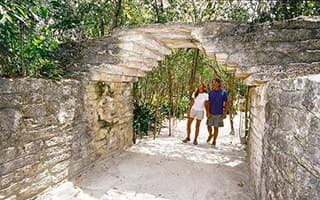
Cozumel is limestone — an ancient reef platform lifted above sea level. Rainwater picks up carbon dioxide, becomes mildly acidic, and slowly dissolves that limestone along fractures. Over immense spans of time, the voids grow into cave passages. Where a ceiling eventually collapses, the cave opens to the surface and you have a cenote.
So the space you are swimming in was hollowed out by water working on stone across a timescale that is difficult to hold in your head. And where water has dripped through the ceiling into open air, it has left mineral behind — the stalactites hanging above you built up in layers so slowly that a formation the length of your forearm can represent a span longer than recorded human history.
That is genuinely the experience: floating in still, clear, cool water inside a structure that took hundreds of thousands of years to carve. It is quiet in a way open water never is. Sound behaves oddly — voices are close and slightly compressed, and small splashes carry. The light comes down through the collapse opening in a shaft rather than from everywhere at once.
On Cozumel the Jade Cavern cenote excursion is how most visitors experience this, and it is the island's principal cenote attraction — worth knowing before you compare it against a reef trip.
What to Wear — and What You Absolutely Cannot
The gear rules for a cenote swim are different from beach rules, and one of them is non-negotiable.
No sunscreen. No insect repellent. No lotions, oils, cosmetics, or hair product. This is not a preference; it is how cenotes are protected. A cenote is not an enclosed body of water — it is a window into the groundwater the island depends on, and anything that rinses off your skin enters that system with no filtration and nowhere to go. Guided excursions require you to shower before entering for exactly this reason. Our explainer on why you must rinse before a cenote swim covers the freshwater lens and why even products labelled reef-safe are not cenote-safe.
Plan for that rule rather than being ambushed by it:
- Apply nothing that morning if a cenote is on the itinerary, or apply it after you swim
- Bring a rash guard or light long-sleeve top — sun protection you wear instead of sun protection you smear on
- Wear a swimsuit under your clothes so you are not negotiating a changing room
- Bring a towel and a full change of clothes — freshwater does not evaporate off you the way seawater does, and you will be cooler and damper for longer afterward
- Water shoes or secure sandals — access usually involves stone steps or a ladder, often wet
- Leave jewellery on the ship, especially rings, which slip off more easily in cool freshwater than warm salt
Our Cozumel packing list covers the general port-day version of this.
On cameras: clear, still, low-light water is beautiful and difficult in equal measure. Phones in cheap pouches leak, and a dropped phone in a cenote is gone. If photographs matter to you, bring a properly rated waterproof camera on a wrist tether, or accept that this is one you remember rather than record.
Cenote or Reef? They Are Not Competing for the Same Slot
Visitors often treat this as a choice between two versions of the same afternoon. They are not remotely alike.
A reef snorkel is about life — fish, coral, colour, movement, warm buoyant saltwater, and open sky. It is active, bright, and busy.
A cenote swim is about place — stone, stillness, cool clear freshwater, filtered light, and quiet. There is very little to look at in the biological sense, and that is the point. The subject is the space itself.
If you have a full day, doing both gives you the two halves of what this island actually is: a living reef on the outside and a hollow limestone skeleton underneath. Our comparison of a cenote excursion versus a reef snorkel breaks down which suits which kind of traveller, and the Cozumel cenote tours guide covers logistics and timing.
The Short Version
A cenote swim is cool, still, startlingly clear freshwater inside a limestone cave. You will float a little lower than you do in the sea. The first thirty seconds are bracing and then they are not. The water will be about the same temperature whenever you visit. You cannot wear sunscreen. The rock above you is older than anything else you will touch on your holiday, and it is quiet in there in a way that people remember long after they have forgotten which reef they snorkelled.
Knowing all of that in advance does not spoil it. It removes the small disorientations that otherwise take up the first ten minutes, and lets you spend the swim looking up instead.
Ready to plan one? Read the complete Cozumel cenotes guide for the full picture, check the Cozumel Cruise Tours FAQ for port-day questions, or book your Cozumel cenote excursion directly.