Cozumel has the best snorkeling in Mexico — but not every reef is created equal. A ranked, local guide to the best snorkeling spots in Cozumel, what makes each one unique, and how to pick the right one for your day.
The Best Snorkeling Spots in Cozumel: A Local's Ranked Guide for 2026
Ask any honest snorkeler where the best reef water in the Caribbean lives, and Cozumel keeps coming up. The island sits at the edge of the Mesoamerican Reef System — the second-largest barrier reef on the planet — and a combination of clear water, healthy coral, and consistent currents makes it a top-tier snorkeling destination not just for beginners, but for people who've snorkeled the world.
But here's what the marketing pages don't tell you: not all Cozumel reefs are the same, and matching the right reef to your skill level, schedule, and crowd tolerance is the difference between an unforgettable day and a frustrating one.
This is an honest, ranked guide to the best snorkeling spots in Cozumel — what each one is actually like, who they're suited for, and how to decide. When you're ready to book, the snorkeling tour category page lists the active tours that visit each of these spots.
What Makes Cozumel Snorkeling Different
Before ranking the spots, it helps to understand why Cozumel sits in its own category.
The island sits on the leeward side of the Yucatán Peninsula, which means it's mostly protected from open Atlantic swell. The water clarity is famously high — visibility of 100+ feet is common, and on good days you can see clearly down to 40-meter depths from the surface. The reefs themselves are part of a federally protected national marine park (Parque Nacional Arrecifes de Cozumel), which has limited fishing pressure for decades and produces reef life density you don't find at unprotected sites.
What you'll see, in roughly the order you'll start noticing it:
- Sergeant majors, parrotfish, and damselfish (everywhere, immediately)
- Spotted eagle rays gliding through deeper channels
- Sea turtles — green and loggerhead are both regulars
- Nurse sharks resting under coral overhangs
- The occasional barracuda or moray
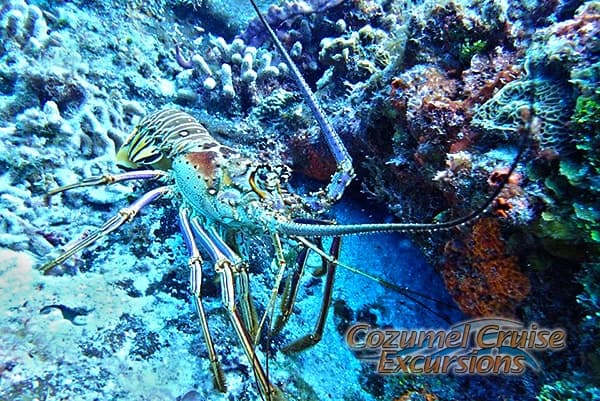
- Spiny lobsters and queen conchs in shallow zones
- Reef fish in numbers and varieties that surprise even experienced snorkelers
That's the baseline. The differences between specific spots come down to depth, current, reef structure, and how the site is set up logistically.
How These Rankings Work
The list below is ranked on a composite of water quality, marine life density, accessibility, suitability for the typical snorkeler, and crowd reality. A reef that's spectacular in theory but mobbed with 12 boats at once doesn't score as well as a marginally less famous reef where you actually get a clean experience.
For first-time visitors and cruise passengers with one shot at this, work top-down. For repeat visitors building a multi-day plan, mix and match.
1. El Cielo
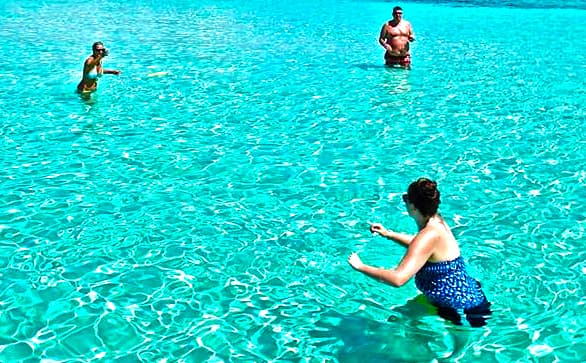
The undisputed crown jewel of shallow-water Cozumel snorkeling. El Cielo ("Heaven") isn't a reef in the traditional sense — it's a wide, shallow sandbar on the southwest side of the island where the water rarely exceeds chest-deep, and the bottom hosts an unusually large population of orange and red starfish (Oreaster reticulatus).
The water is bath-warm, visibility is often 80-100 feet, and the contrast of bright sand bottom and turquoise water has earned it photographer-of-the-month status across travel publications. Marine life at El Cielo specifically isn't reef-density — you go for the starfish, the sandbar, and the surreal water clarity, not for pelagic fish.
Best for: Families, weak swimmers, first-time snorkelers, photographers, anyone who wants the postcard image of Caribbean water.
Caveats: It's a popular stop. Going early in the day matters. Also, touching the starfish stresses them; reputable operators brief you to observe-only.
Most snorkel-and-sail tours include El Cielo as one of three stops — for example, catamaran-style snorkeling tours typically combine El Cielo with reef stops to give you the full range.
2. Palancar Reef
Cozumel's most famous and arguably most beautiful reef. Palancar is actually a five-kilometer reef system with distinct sections — Palancar Gardens, Palancar Caves, Palancar Bricks, and Palancar Horseshoe.
Palancar is technically deeper than the average reef-top snorkel, but the shallow sections (15-30 feet) are well within snorkel range and feature dramatic coral towers, swim-throughs, and consistent reef fish populations. The structure here is what sets it apart — you're not just floating over a coral mat, you're swimming through what looks like underwater architecture.
Best for: Confident snorkelers who want the iconic Cozumel reef experience. Strong swimmers can drift along the wall edge and see deeper-water species.
Caveats: Mild to moderate current depending on the day. Most operators include drift snorkeling here — you start at one point and the boat picks you up downstream. Not the right reef for beginners.
3. Colombia Shallows
Colombia Reef has two zones — the deep wall (a diver's reef, not realistic for snorkelers) and the shallows, which are world-class for surface snorkeling.
Colombia Shallows has gentler current than Palancar, abundant sea turtle sightings, and a varied reef structure that includes both coral heads and sandy patches teeming with juvenile fish. It's often described as the "easy version of Palancar" — most of the visual reward, less of the swimming demand.
Best for: Intermediate snorkelers, families with older kids comfortable in deeper water, anyone hoping to see turtles.
Caveats: Visibility can vary more than at other sites. Sea conditions matter — on rougher days, Colombia gets called off before some other reefs.
4. Punta Sur
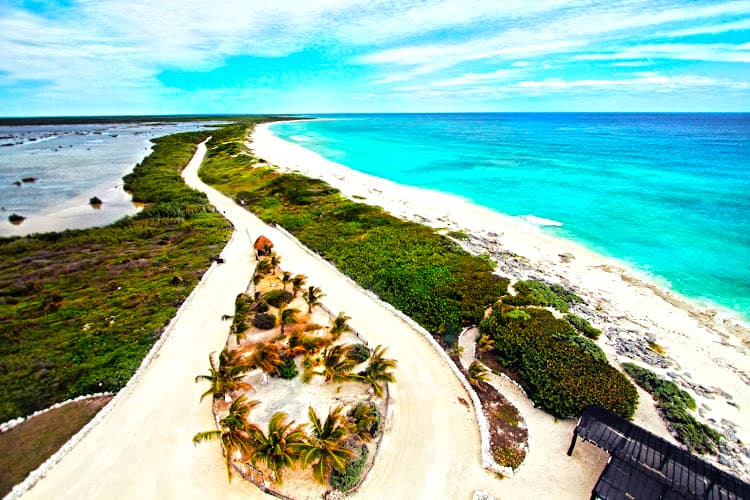
The southern tip of the island and one of the more underrated sites. Punta Sur combines reef snorkeling with the option of paddling through inland mangroves and lagoons, which makes it a more varied half-day than a single-reef stop.
The reef itself is less crowded than Palancar or Colombia because it's farther from town, and the marine life is genuinely abundant — turtles, rays, occasional crocodile spotting in the lagoon zones (from a safe distance).
Best for: Travelers who want an "explore the south end" day rather than a pure snorkel sprint. Good for second-time visitors.
Caveats: Logistics are less plug-and-play than the main reefs. Tour structure matters.
5. Money Bar (Dzul-Ha)
The best beach-accessible snorkeling on the island. Money Bar sits on the western coast, and the reef is literally a 20-meter swim from the shore. There's no boat involved.
The reef structure is more modest than Palancar or Colombia, but the marine life immediately off the beach is genuinely impressive — and the convenience of walking from the bar to the reef to lunch and back is a real factor when you're optimizing a port day with limited transit time.
Best for: Cruise passengers who want snorkeling without a boat day, families with mixed comfort levels (one parent can stay on the beach with non-snorkeling kids), anyone with limited time.
Caveats: Crowded at peak hours. Visibility is more variable than offshore reefs. Not a substitute for the real reefs if you can swing it.
6. Paradise Reef
Located just off the western coast near the cruise piers, Paradise Reef is the closest reef system to the port — sometimes 5 minutes by boat. The shallow depth (15-30 feet) and easy access make it one of the most-visited reefs on the island.
The reef itself is healthy, though it lacks the dramatic structure of Palancar. You'll see plenty of reef fish, sometimes turtles, and the occasional eagle ray.
Best for: Tight-schedule snorkeling, beginners who want to ease into the experience before going to bigger reefs, snorkel-and-back-to-ship trips.
Caveats: High traffic. Best experienced on early or late tours when crowds thin.
7. Tormentos Reef
A lesser-mentioned reef that delivers more than its reputation suggests. Tormentos is a sloping reef with mixed coral and sand patches that creates excellent conditions for spotting moray eels, lobsters, and small reef fish in the cracks and crevices.
It's a popular drift snorkel because the gentle current carries you along the reef line without effort.
Best for: Snorkelers who want to mix into a multi-stop tour and prefer reef-life density over dramatic structure.
Caveats: Less photogenic than the headline reefs. Easy to skip if you're prioritizing visual wow factor.
8. Yucab Reef
Yucab is shallower and more sheltered than Palancar or Colombia, which makes it a strong fit for intermediate snorkelers stepping up from beach reefs. The current is usually mild and the coral structure offers plenty of small swim-through opportunities.
Best for: Snorkelers building skill, smaller group tours, families with adventurous teenagers.
Caveats: Not a "wow on first look" site — it grows on you over a 45-minute session.
How to Choose: A Practical Decision Path
The "best snorkeling spots in Cozumel" question is really four questions stacked together. Walking through them in order will get you to your answer:
- How comfortable are your swimmers? If anyone in your group is a weak swimmer, prioritize El Cielo, Money Bar, or shallow-stop tours. Don't book a drift snorkel at Palancar.
- Boat or beach? Boat tours hit better reefs but require commitment to a half- or full-day. Beach snorkeling (Money Bar, parts of Chankanaab) is shorter and lower-commitment.
- How many stops? Most reputable operators offer three-reef tours. That's the sweet spot for first visits — you get the El Cielo experience plus two reef stops without burning out.
- What's the boat? Catamarans are slower but more comfortable. Smaller speedboats are faster between stops and better for serious snorkelers who want to maximize water time. The private tours category covers small-boat options.
For travelers who want a guided overview of how to think about an entire shore day around snorkeling, the plan-your-day tool walks through it step by step.
Cozumel Snorkeling vs. Cozumel Diving
It's worth being honest: Cozumel is even better for scuba diving than for snorkeling. Palancar Wall, Santa Rosa Wall, and Punta Sur Deep are world-class dive sites that snorkeling can only sample at the surface.
If you're a certified diver, the diving tour category is a stronger pick than snorkeling for at least one day of your trip. If you're not certified, several discover-scuba programs let you do a one-day intro dive on the same reefs you'd snorkel — significantly closer to the action.
That said, snorkeling holds up on its own merits in Cozumel in a way it doesn't in many destinations. The shallow zones are genuinely spectacular, and you don't need a certification or a tank to see most of what people come for.
When to Go
Cozumel snorkeling is good year-round, but conditions vary:
- March–June: Peak. Calmest water, best visibility, warmest air temperatures, lowest hurricane risk.
- July–October: Hot and humid. Hurricane season; conditions can be excellent or canceled depending on storms.
- November–February: Cooler. "Nortes" (north winds) can disrupt eastern-side conditions. Reefs on the protected western side still snorkel well.
For deeper detail, our best-time-to-visit guide covers seasonal conditions for both cruise and stay-over travelers.
Tips That Materially Improve Your Day
A short list, accumulated from years of guiding people through this:
- Wear a rash guard or sun shirt. Snorkeling sunburn is brutal. Your back is in the sun for an hour straight.
- Use reef-safe sunscreen. It's law in the marine park. Operators will check.
- Bring your own mask if possible. Rental masks fit poorly more often than not, and a leaking mask ruins the experience.
- Skip the camera on your first stop. Snorkel for 10 minutes without a phone or GoPro. Then start shooting. Most people miss the first stop trying to figure out their camera rig.
- Hydrate before the boat ride. Salt water and sun dehydrate fast. Most tours include water; drink it.
- Don't touch coral. Beyond the legal issue, touching coral kills it. Float horizontally; stay above the reef.
- Defog your mask before each stop. A drop of baby shampoo, dish soap, or even saliva and a rinse keeps the lens clear.
Final Thoughts
If you have one day in Cozumel and you want the iconic experience, the answer is a multi-stop snorkel tour that hits El Cielo plus one or two real reefs (Palancar Shallows, Colombia, or Yucab, depending on conditions and skill level). That single decision will give most travelers the best snorkeling experience they've ever had — and Cozumel will set a new ceiling for what they expect from Caribbean water.
If you have multiple days, layer in a beach snorkel at Money Bar and a southern-coast day at Punta Sur. If you're diving-certified, swap one snorkel day for a reef dive — you won't regret it.
Ready to lock in a date? The snorkeling tours page has live availability for the next several weeks, and our contact team can help match the right tour to your group's skill level and schedule. Cozumel rewards travelers who pick the right reef for the right day — and now you know how.