Cozumel isn't dangerous as a destination — but it does have a genuinely hazardous side, and most visitors don't know it exists until they're standing on it. Here's the geography of risk on the island, from a company that runs tours there every day.
Is Cozumel Dangerous? The Honest Answer Depends Entirely on Which Side of the Island You're On
When people ask whether Cozumel is dangerous, they are almost always asking about crime. That is the wrong question, and we say that as a company whose guides are on this island every single day of the cruise season.
The crime question has a well-documented answer, and we have addressed it thoroughly in our guide to whether Cozumel is safe for Americans in 2026 — including what the actual crime data shows, how Cozumel differs from mainland Mexico, and how the island compares to other Caribbean cruise ports. If crime is your primary concern, start there.
This article is about the thing almost nobody asks about, and the thing that actually sends visitors to the Clínica San Miguel: geography.
Cozumel is not one environment. It is two, separated by about twenty minutes of driving, and they have completely different risk profiles. Visitors who get hurt here are overwhelmingly people who wandered from one into the other without realizing anything had changed.
The Island Has a Calm Side and a Wild Side
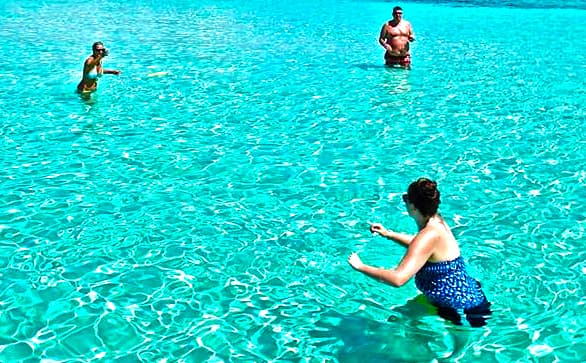
Cozumel sits with its western shore facing the mainland, sheltered inside the Cozumel Channel. That west side is where everything you have heard of lives: the three cruise piers, San Miguel town, the beach clubs, the reefs, the hotels, the restaurants. The water there is famously flat — that shelter is precisely why Cozumel became a world-class snorkeling and diving destination in the first place.
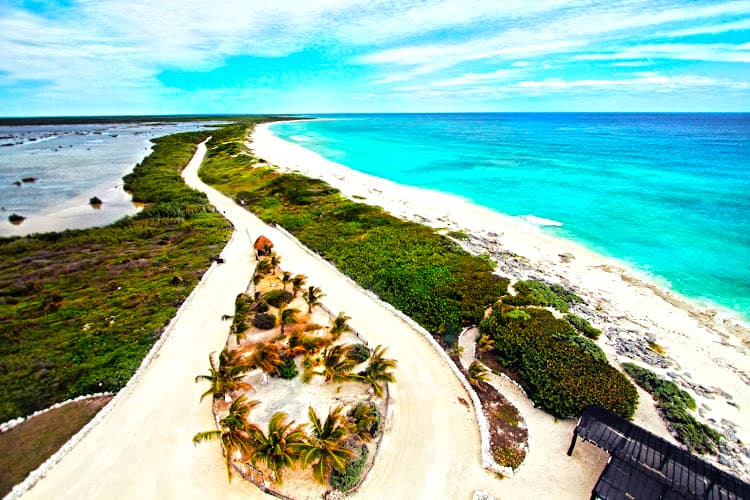
The eastern shore faces the open Caribbean. Nothing stands between it and thousands of miles of ocean. It is beautiful, largely undeveloped, almost entirely without hotels, and it is where the island's genuine hazards are concentrated.
Most cruise passengers never see it. The ones who do usually get there by renting a jeep or a scooter and driving the loop road, discovering a stunning empty beach, and stopping.
What Makes the East Side Different
There are no lifeguards. Not "few." None. The developed beach clubs on the west side have staff, ropes, flags, and boats. The east side has open coastline and, at a handful of spots, a small restaurant.
The currents are real and they are not visible. The east coast produces strong, persistent rip currents and heavy shore break. Rip currents do not look dangerous from the sand — that is their defining characteristic. The water often looks inviting precisely where it is worst.
Some beaches have warning signs. Many do not. Where signs exist, they mean it. A red flag or a "no swimming" sign on the east side is not liability boilerplate; it is a description of the water.
Help is far away. Cell coverage is patchy along stretches of the eastern road. There is one road. If something happens, the response time is measured in a very different unit than it would be at a beach club ten minutes from the pier.
Alcohol is often involved. The east-side beach bars are a legitimate highlight of the island. Combining them with an unlifeguarded, high-energy shore break is the specific pattern that produces the worst outcomes here.
None of this makes the east coast a place to avoid. It is one of the most beautiful drives in the Caribbean, and we take guests there. It makes it a place to not swim casually, which is a much smaller ask.
The Ranking Almost Nobody Publishes
If you sorted the actual causes of visitor injury on this island by severity rather than by how much media attention they attract, the order would look roughly like this:
1. Water on the east coast. Drowning is the most serious realistic risk a visitor faces in Cozumel. It is also the most preventable, because avoiding it requires only that you swim on the west side.
2. Two-wheeled rentals. Scooters and mopeds, on unfamiliar roads, often without helmets, sometimes after a drink, frequently by people who last rode one years ago. A low-speed scooter fall produces road rash and broken collarbones at a rate that would surprise you. If you want to see the island independently, four wheels are dramatically safer than two — one reason our private jeep excursions exist in the form they do.
3. Sun and dehydration. Deeply unglamorous, and a genuine cause of medical incidents on port days. The tropical sun at this latitude, combined with a beach day and alcohol, produces heat exhaustion in visitors who thought they were being sensible.
4. Reef and marine contact. Fire coral, sea urchins, and boat-related scrapes. Rarely serious, frequently trip-ruining.
5. Crime against tourists. Real but statistically uncommon, and dominated by opportunistic theft and overcharging rather than anything violent. This is the category people worry about most and encounter least.
Notice that the top four have nothing to do with crime and everything to do with environment and decision-making.
The Risk That Isn't Physical: Missing Your Ship
There is one more category worth naming, because it is the most common bad outcome on any Cozumel port day and it is entirely logistical.
Ships do not wait. If you are on an independently booked excursion and you are late back, the ship sails, and you are responsible for getting yourself to the next port at your own expense — passport, visa, flights, and all.
This is the single strongest argument for booking with an operator that guarantees return timing against the published cruise schedule, and for understanding the tradeoffs laid out in our comparison of cruise line shore excursions versus independent tours. It is also why we build our itineraries backward from all-aboard time rather than forward from arrival — an approach we describe in our Cozumel port day planning guide.
What Actually Reduces Your Risk Here
Almost all of it comes down to five habits:
Swim on the west side. If you want open-Caribbean scenery, drive the east coast, photograph it, eat lunch at a beach bar, and get back in the water on the sheltered side. This single rule eliminates the most serious hazard on the island.
Respect flags and signs without negotiating with them. Local staff are not being cautious for fun.
Choose four wheels over two. If you are determined to rent a scooter, wear the helmet, stay off the coastal road in wind, and do it before drinking rather than after.
Drink water on a schedule, not on thirst. Thirst lags dehydration badly in this climate.
Know your all-aboard time and build backward from it. Not your arrival time. Your departure time.
For the operational side — pier layouts, taxi norms, where the terminals actually put you relative to town — our Cozumel cruise port guide covers the ground, and our safety standards page explains the equipment, guide certification, and insurance requirements we hold our own operations to.
So, Is Cozumel Dangerous?
As a destination, no. Cozumel is one of the more benign places an American traveler can spend a day, and the statistical picture supports that — which is exactly what our honest 2026 assessment of Cozumel's safety for American visitors lays out in detail.
As a set of specific activities, some of them carry real risk, and the risk is geographically concentrated in a way that is invisible unless someone tells you. The east-facing shore of this island is genuinely hazardous water. The west-facing shore is the reason Cozumel is famous.
Knowing which one you are standing on is most of the safety conversation. If you would rather not have to make that judgment call yourself, that is what guides are for — you can browse our full range of Cozumel shore excursions and let someone who does this daily handle the geography.
Frequently Asked Questions
Is it dangerous to leave the cruise port in Cozumel? No. Leaving the port area is normal and the island's west side is well-trafficked and tourist-oriented. The risks that matter are environmental — water conditions, scooters, sun — rather than related to leaving the pier itself.
Can you swim on the east side of Cozumel? At a small number of protected spots, cautiously. At most of it, no. There are no lifeguards, the shore break is heavy, and rip currents are common. Treat east-side water as scenery unless a local operator tells you otherwise.
Is renting a scooter in Cozumel dangerous? It is the second most common cause of visitor injury on the island. Roads are unfamiliar, wind on the coastal road is significant, and helmets are inconsistently used. A jeep or a guided tour carries meaningfully less risk.
Are the beaches in Cozumel safe for kids? On the west side, generally yes — the sheltered channel produces calm, shallow water and the beach clubs are supervised. The east coast is not appropriate for children in the water.
Is Cozumel more dangerous than other Caribbean cruise ports? No. Cozumel's economy is built around cruise tourism and the island is policed accordingly. Our detailed comparison against other ports is covered in the main safety guide linked above.